Chilled storage is the quiet hero behind every successful food business in Saudi Arabia. Restaurants, cloud kitchens, importers and catering companies all live or die by the temperature of their inventory, yet cold space is often the last thing founders plan and the first thing they regret improvising. In a market as hot as the Kingdom’s, in every sense of the word, that habit gets expensive quickly.
The scale of the opportunity makes the problem worth solving properly. Saudi Arabia imports a large share of what it eats, demand spikes hard around Ramadan and the holiday season, and delivery apps have trained customers to expect perfect quality on every order. This guide walks through the decisions that matter for 2026: which temperature band your products truly need, where cooling saves money instead of burning it, and how to judge a provider before trusting them with perishable stock.
How Cold Is Cold Enough for Your Products?
Cold is not one thing. Freezing yoghurt ruins it, and refrigerating flour wastes money. Matching every product to its correct band is the first and cheapest optimisation available to any food operator.
| Band | Typical Range | Products |
|---|---|---|
| Frozen | -18°C and below | Meat, seafood, ice cream, frozen dough |
| Chilled | 0°C to 4°C | Dairy, fresh juice, cut vegetables, desserts |
| Cool | 8°C to 15°C | Chocolate, certain fruits, some beverages |
| Ambient | Controlled room temperature | Canned goods, rice, oil, packaging |
Pull your supplier specification sheets and check every SKU against this split. A product held one band too warm loses shelf life; one band too cold, and texture, emulsion or packaging suffers instead.
Where Chilled Storage Saves Money
Refrigerated space costs more per square metre than dry space, so it has to earn its keep. In practice it usually does, through three separate channels that show up directly in the accounts.
- Less spoilage: the Food and Agriculture Organization estimates that roughly a third of food produced worldwide is lost or wasted, and broken cold chains carry much of the blame.
- Better purchasing: reliable cold capacity lets you buy in bulk when prices dip instead of paying spot prices every week.
- Steadier quality: stable temperatures mean consistent taste and texture, which protects reviews, ratings and repeat orders.
Track your waste as a percentage of stock value for one month. If it sits above two or three percent, temperature control is almost certainly where the money is leaking.
Renting Cold Space Instead of Building It
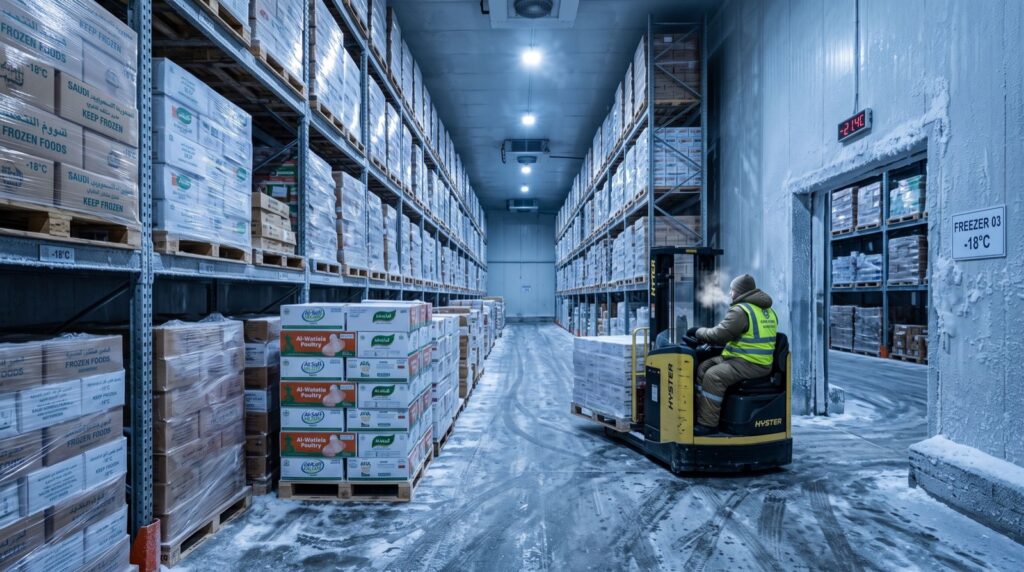
Buying walk-in freezers, compressors and standby generators ties up capital that a growing food business needs for stock, staff and marketing. Renting professional Chilled Storage converts all of that into one predictable monthly fee, with maintenance, monitoring and backup power handled by the facility.
Renting also removes the single scariest failure mode a small operator faces: the compressor that dies on a Thursday night before a holiday weekend, with a full room of stock inside and no technician answering the phone.
Do Not Forget the Dry Half of Your Inventory
By volume, most kitchen stock is actually dry: rice, flour, oil, canned items, disposables and packaging. None of it needs refrigeration, but all of it needs protection from heat, humidity and pests, especially through the long Gulf summer when storerooms turn into ovens.
Operators in the Eastern Province increasingly pair their cold rooms with Ambient Storage in Dammam so both halves of the inventory sit under one roof, one contract and one delivery run. The pairing simplifies stock counts, shortens receiving days and cuts shuttle trips between sites.
How to Vet a Cold Storage Provider
Facilities can look identical on a tour and behave completely differently at two in the morning. Work through this checklist before committing perishable stock anywhere.
- Ask for temperature logs from the past month, not just a live dashboard reading.
- Confirm backup power exists and how long it can hold temperature during an outage.
- Check receiving hours against your suppliers’ actual delivery schedules.
- Verify insurance, and exactly what it covers if stock spoils in their custody.
- Talk to current tenants about response times when something goes wrong.
The diligence people apply when comparing reputable service experts for everyday household services applies double here, because a bad choice does more than waste money; it can put unsafe food in front of your customers.
Cold Chain Mistakes That Sink Small Operators
Even with good facilities, daily habits decide whether the cold chain actually holds. The failures below appear again and again in kitchens and trading firms across the Kingdom, and every one of them is avoidable.
- Leaving deliveries on the dock: twenty minutes in summer heat can undo a week of careful refrigeration.
- Overfilling rooms: blocked airflow creates warm pockets that spoil stock while the thermostat reads fine.
- Ignoring door discipline: every propped-open door during receiving drags the whole room out of range.
- Skipping calibration: a sensor drifting two degrees can quietly shorten the shelf life of everything inside.
Fixing these costs almost nothing. Assign one person to own receiving, post the target ranges on each door, and put calibration on the calendar twice a year.
Frequently Asked Questions
What is the difference between chilled storage and frozen storage?
Chilled storage holds products just above freezing, typically 0°C to 4°C, slowing spoilage while preserving texture. Frozen storage at -18°C or below nearly stops microbial activity and suits long-term holding of meat, seafood and prepared items.
How much chilled storage does a small food business need?
Work backwards from your busiest week: perishable stock on hand, plus safety stock, plus space for air circulation around the product. Most small operators land between a few pallet positions and one small dedicated room, and good providers let the footprint grow with orders.
Can chilled storage really reduce my food costs?
Yes, whenever it enables bulk buying and pushes spoilage below two or three percent of stock value. Measure waste for one month before and one month after moving into professional cold space; the comparison usually ends the debate.
Wrapping Up
Chilled storage is not overhead; it is the infrastructure your margins stand on. Map every product to its correct temperature band, pair the cold rooms with solid dry storage, and vet providers as if your reputation depends on it, because in the Saudi food market of 2026 it genuinely does. Audit your cold chain this week, find the weakest link and fix that one first.